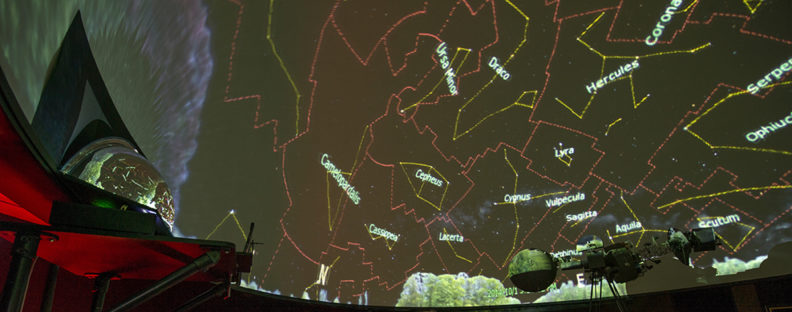
We are gratified that our series of informative and entertaining shows for the general public have proven popular. In 2014 with a 2016 upgrade, we installed a spheric-mirror digital projection system to enable a whole new layer of flexibility in the star theater, including the capability to show fulldome movies. Our dome was painted a friendly gray color in 2019 to reduce light echoes and improve contrast.
Funds from ticket sales maintain and improve our surround sound and full dome visual systems and guarantee an offering of even more spectacular public events in the future. The WSU Foundation will be happy to assist you if you wish to accelerate the upgrades with a financial gift (donate to “gf007726 – Planetarium and Observatory Support Fund”).
Our offerings:
- Day time school / children’s groups ($0), scheduled by gworthey@wsu.edu.
- Evening public shows ($5. No advanced ticket sales: door only.)
- Corporate facility rental: scheduled by gworthey@wsu.edu.
Directions and parking
Directions from Stadium & Main: Turn up Stadium, immediate left at Nevada, immediate left at Washington, turn right on Spokane Street and go 2.5 blocks. Sloan Hall is on your left, but if you are parking, turn left or right on College Ave to seek parking.
For walkers coming from campus, the pedestrian bridge is the most convenient entry; come across the bridge, come in the building, then turn right. Twenty paces later, just past the staircase double doors, turn left and head down the hall to Sloan 231. There are placards pointing the way, but they are unobtrusive.
If you come in the main Sloan Hall entrance, the one with all the signage and lots of glass, you are a level below the pedestrian bridge and the planetarium. Take an immediate left, then enter the staircase with the double doors on your left. Go up one floor. The planetarium is down the hall.
- Parking near the planetarium is “Green 3” zone.
- Parking on weekends and after 5 p.m. is free.
- Buses: During business hours, parking for buses is free on Flag Lane.
- Cars: During business hours, use the AMP parking app for hourly parking, available from WSU Parking Services.
Now showing
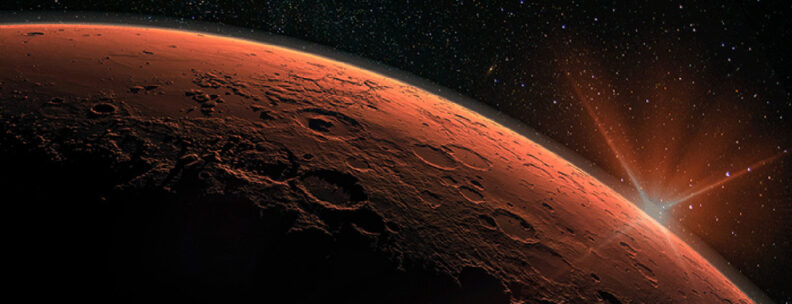
Mars: The Ultimate Voyage
7pm, Friday, March 6 and 5pm Sunday, March 8
A docent will point out night sky highlights and upcoming astronomical events. This is followed by a fulldome video presentation.
An update on the Red Planet, and an inside look at the plans for human exploration for this intriguing world.
[Spring Break]
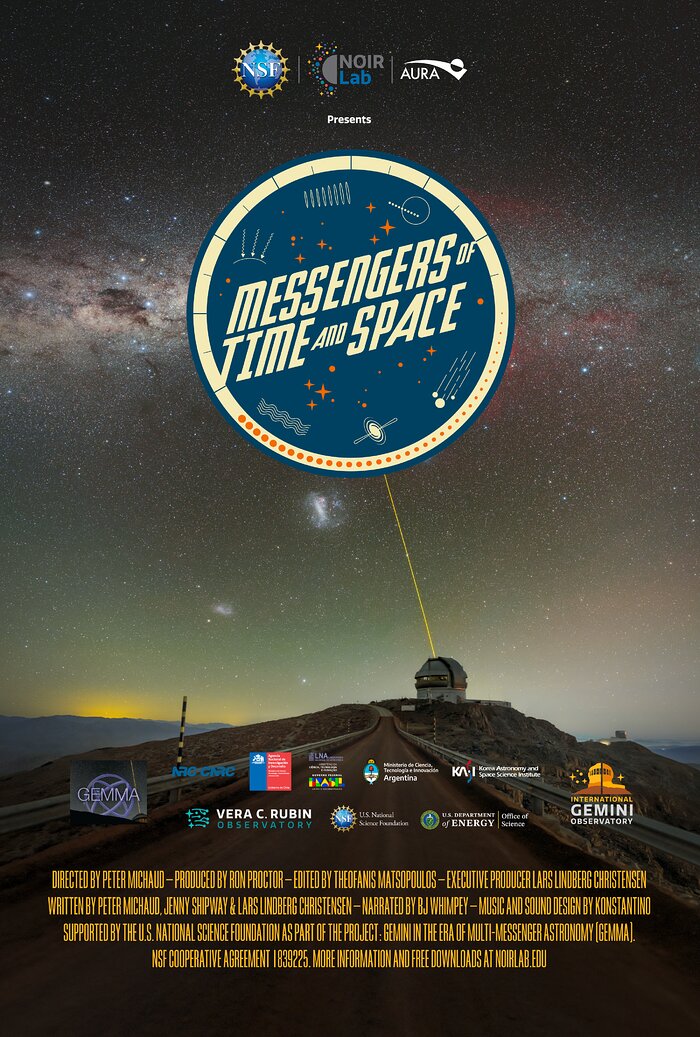
Messengers of Time and Space
7pm, Friday, March 27 and 5pm Sunday, March 29
A docent will point out night sky highlights and upcoming astronomical events. This is followed by a fulldome video presentation.
An introduction to one of the most exciting innovations in astronomy: so-called multimessenger astronomy, where astronomers attempt to combine information from telescopes at many wavelengths and then add information from neutrino emission and gravitational wave detections.
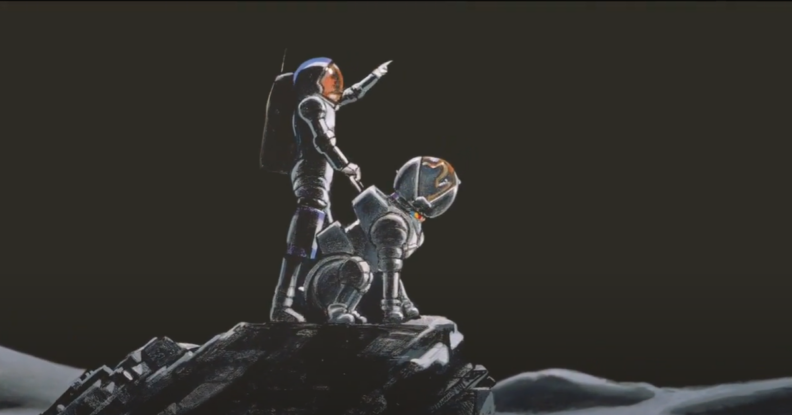
Max Goes to the Moon
7pm, Friday, April 3. (no Sunday show)
A docent will point out night sky highlights and upcoming astronomical events. This is followed by a fulldome video presentation.
Max Goes to the Moon is a delightful fantasy for children of all ages, with plenty of lunar factual matter for the grownups and plenty of cuteness overload for everyone. The for-planetarium adaptation was written by noted textbook and children’s book author Jeffery Bennett, introduced by astronaut Alvin Drew.
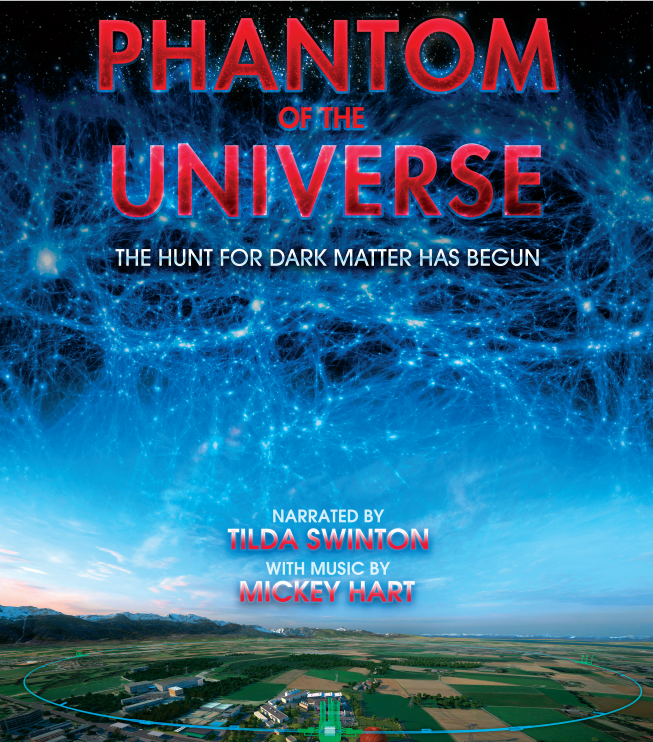
Phantom of the Universe
7pm, Friday, April 10 and 5pm, Sunday, April 12.
A docent will point out night sky highlights and upcoming astronomical events. This is followed by a fulldome video presentation.
Phantom of the Universe gives an overview of one of the greatest cosmic mysteries of our time: the presence and nature of dark matter. We don’t know what it is because it emits no light, but its gravity influences the rotations and clustering properties of galaxies. This movie focuses on earth-based experiments to try to discover the elusive, unpredicted subatomic particle that makes up dark matter – if indeed that’s the nature of it.
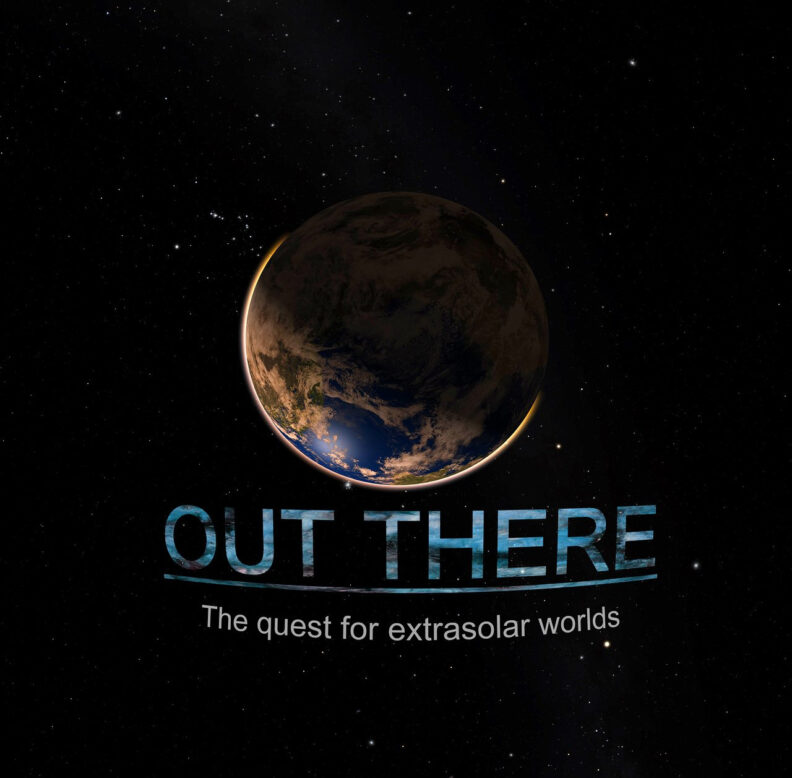
Out There
7pm, Friday, April 17 and 5pm, Sunday, April 19.
A docent will point out night sky highlights and upcoming astronomical events. This is followed by a fulldome video presentation.
In just thirty years, we have gone from zero to thousands of planets known outside our own solar family of worlds. This film explores discovery techniques and gives a sense for the wide variety of extrasolar planets that exist – out there.
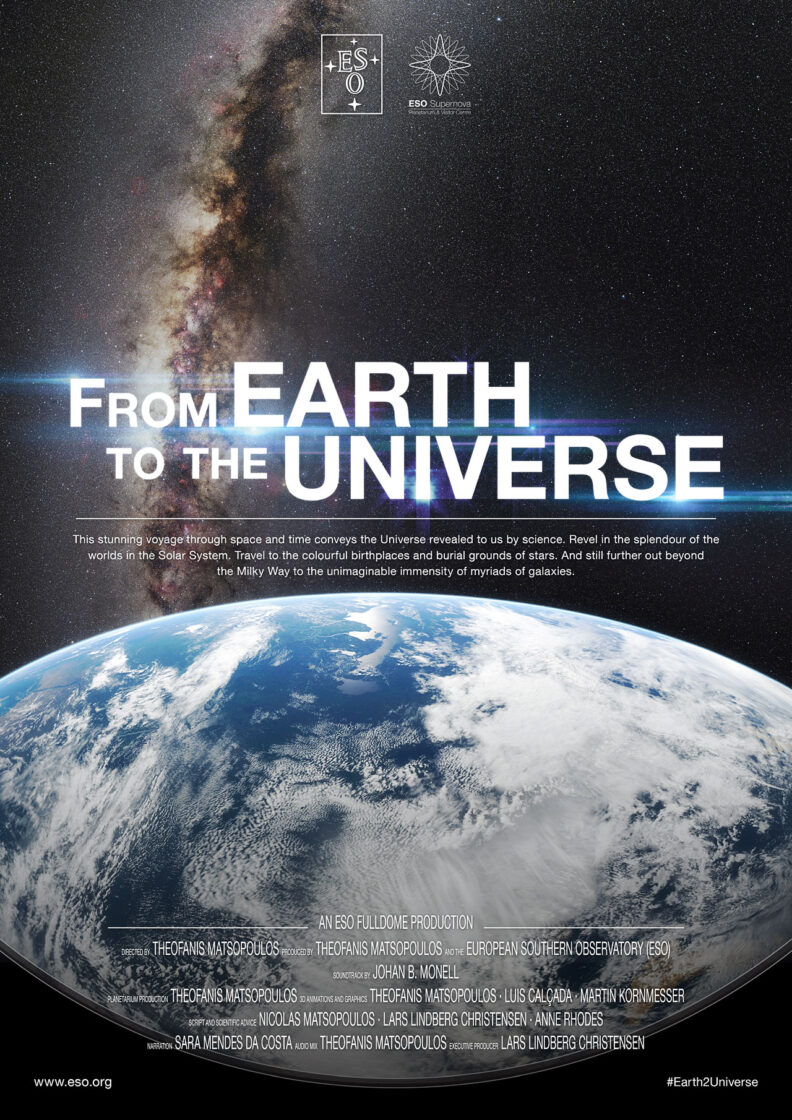
From Earth to the Universe
7pm, Friday, April 24 and 5pm, Sunday, April 26.
A docent will point out night sky highlights and upcoming astronomical events. This is followed by a fulldome video presentation.
From Earth to the Universe brings the audience through all the size scales of the universe, from the earthly to the extragalactic. Meet the natural units of the universe, from atoms to planets, to stars and galaxies.
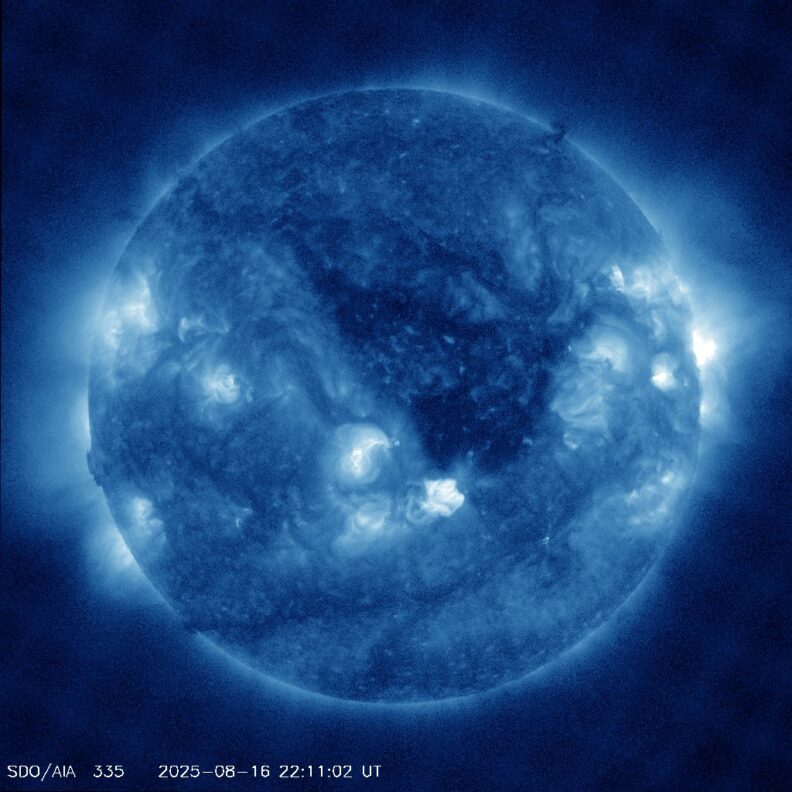
The Sun
7pm, Friday, May 1 and 5pm, Sunday, May 3.
A docent will point out night sky highlights and upcoming astronomical events. This is followed by a fulldome video presentation.
The Sun is a fulldome planetarium show produced by European Southern Observatory. After a historical overview, the audience will see images from ground-based and space-based telescopes and explore the sun’s power over life on earth. Explore the past and future predicted evolution of the sun, and even sample a little bit of spectroscopy, which measures the chemical elements present in our nearest and most familiar star.
[Summer Break]